
"robusta flowering"
2000 article(s) found

A brief introduction to the planting situation, geographical location, climate and altitude of high-quality coffee beans with strong aroma
Typica and Bourbon, two classic high-quality coffee varieties, are the main coffee varieties in Yunnan. In 1991, a series of Catimor varieties were introduced from Kenya (stronger anti-virus ability and higher yield). A variety of Arabian species (also known as small seed species). Because the morphology and habits of the two varieties are similar, the two varieties are mostly mixed. Yunnan area
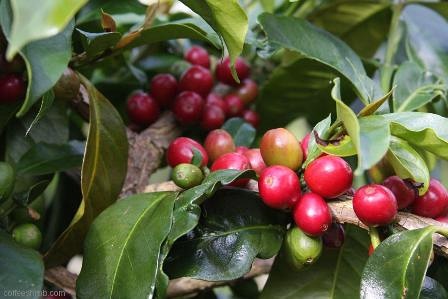
Brazilian bourbon beans are robusta or arabica? Coffee bean varieties
The global coffee bean species are mainly divided into: Arabica (Arabica) and Robusta (Canephora), of which Arabica coffee beans account for about 70%80%coffee has more than 100 coffee varieties, more common coffee are: Arabica Arabica, outstanding personality, unique flavor, is the main boutique coffee, mainly used for coffee shop operations and high-end coffee market supply; Robusta

Cold coffee is no different from hot coffee. What's the difference between cold coffee and hot coffee?
Professional coffee knowledge exchange more coffee bean information Please pay attention to the coffee workshop (Wechat official account cafe_style) Coffee flavor varies according to the treatment and baking depth, and how to match with the dim sum? Effect of coffee bean treatment on flavor traditionally, raw beans can be divided into sun drying (Nature) and water washing (W) according to local climatic conditions.

A brief introduction to the description of the flavor, taste and aroma characteristics of the fine coffee bean with slightly fruity flavor.
After inspecting the coffee planting and primary processing base in Yunnan, international coffee organization tasting experts rated Yunnan coffee as the kind of small seed coffee processed by Colombian wet processing, which is the highest quality coffee in the world. Typica and Bourbon, two classic high-quality coffee varieties, are the main coffee varieties in Yunnan, and Katimo was introduced from Kenya in 1991.

Basic knowledge of Coffee trees Ethiopia in Africa
The origin of the coffee tree is Ethiopia in Africa. In botany, coffee trees belong to the long green trees of the subgenus Rubiaceae, and coffee beans, commonly known as coffee beans, are actually the seeds of the fruit of coffee trees, just because they are shaped like beans, so they are called coffee beans. Climate is the decisive factor for coffee cultivation. Coffee trees are only suitable for growing in the tropics or subtropics, so latitude 25 is south and north.
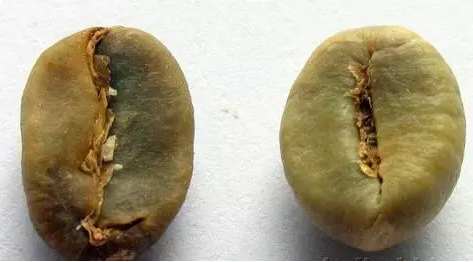
How to quickly tell the difference between Robusta and Arabica?
Professional coffee knowledge exchange More coffee bean information Please pay attention to coffee workshop (Weixin Official Accounts cafe_style) Coffee raw material is coffee beans Basic identification of coffee beans, according to the characteristics of coffee beans to mix different flavors of coffee, is the most basic work of barista. Domestic coffee beans are more dependent

How many varieties of coffee beans are there in the world
There are more than 70 kinds of coffee in the world, of which 3 are mainly cultivated in China. ① small seed species, also known as Arabica coffee, is native to Ethiopia and is cultivated in Taiwan, Fujian, Guangdong, Guangxi, Yunnan and Sichuan. Shrub, 4-6 m tall, with many branches in the basal part; leaves thinly leathery, ovate-lanceolate or lanceolate, entire or undulate, terminal bud green or bronzed, so

How many varieties of coffee beans are there in the world
There are more than 70 kinds of coffee in the world, of which 3 are mainly cultivated in China. ① small seed species, also known as Arabica coffee, is native to Ethiopia and is cultivated in Taiwan, Fujian, Guangdong, Guangxi, Yunnan and Sichuan. Shrub, 4-6 m tall, with many branches in the basal part; leaves thinly leathery, ovate-lanceolate or lanceolate, entire or undulate, terminal bud green or bronzed, so

A brief introduction to the description of the flavor, taste and aroma characteristics of Hongding coffee iron card boutique coffee beans
The average temperature of Lujiangba in Baoshan is 21.5℃, and the highest is 40.4 ℃, which is basically frost-free all the year round. It is recognized as the best producing area of small-grain coffee. The small-grain coffee cultivated here is famous at home and abroad for its strong but not bitter, fragrant but not strong, well-proportioned small noodles, mellow and fruity. International Coffee Organization tasting experts evaluated Yunnan coffee after inspecting Yunnan coffee planting and primary processing bases.

A brief introduction to the Origin, Development, History and Culture of Iron Card Fine Coffee beans with strong aroma
Small grain coffee is suitable for growing in the mountains at an altitude of 8001800 meters. If the altitude is too high, it will taste sour, and if it is too low, it will taste bitter. Small grains of coffee are mostly planted in dry and hot valleys about 1100 meters above sea level, so they are moderately sour, rich and mellow. There is a unique environment suitable for the growth of small seed coffee in many areas of Yunnan, and the quality of small seed coffee is excellent. The planting area is mainly distributed in the

Introduction of three varieties of Coffee the difference between the characteristics of Arabica Coffee Bean Robusta Liberica Coffee
There are three kinds of coffee used for commercial cultivation in the world, namely, small-grain Arabica coffee, medium-grain Robsta coffee and large-grain Liberika coffee. So what are the characteristics of each of the three kinds of coffee? The origin of Arabica coffee originated from the Ethiopian plateau. Because of its excellent flavor and quality, Arabica coffee has been widely cultivated, and its coffee output accounts for all of it.

A brief introduction to the treatment method of grinding degree and baking degree of tin card fine coffee beans with excellent performance
Tibica coffee, native to Ethiopia and southeastern Sudan, is the most widely cultivated variety of coffee in the Western Hemisphere. The plant is stronger, but not light-tolerant, and the yield is higher in Hawaii. The top leaf of Tibika is red and copper, which is called red top coffee. Bourbon coffee is a variety of small-grain coffee second only to Tibica. At first, the main branch and the trunk grew upward at 45 degrees, drooping with the fruit load, and lateral branches.

A brief introduction to the Origin, Development, History and Culture of Red Top Coffee and Iron Card Fine Coffee beans
Small grain coffee is suitable for growing in the mountains at an altitude of 8001800 meters. If the altitude is too high, it will taste sour, and if it is too low, it will taste bitter. Small grains of coffee are mostly planted in dry and hot valleys about 1100 meters above sea level, so they are moderately sour, rich and mellow. There is a unique environment suitable for the growth of small seed coffee in many areas of Yunnan, and the quality of small seed coffee is excellent. The planting area is mainly distributed in the

The basic knowledge of high-quality coffee about coffee trees
The origin of the coffee tree is Ethiopia in Africa. In botany, coffee trees belong to the long green trees of the subgenus Rubiaceae, and coffee beans, commonly known as coffee beans, are actually the seeds of the fruit of coffee trees, just because they are shaped like beans, so they are called coffee beans. Climate is the decisive factor for coffee cultivation. Coffee trees are only suitable for growing in the tropics or subtropics, so latitude 25 is south and north.

How are Ecuadorian coffee beans? Ecuadorian coffee beans have light aromas of flowers, fruit and caramel.
Professional coffee knowledge exchange more coffee bean information please follow the coffee workshop (Wechat official account cafe_style) front street-Ecuador Coffee introduction most countries in the world are rich in only one kind of coffee beans, but Ecuador is one of the few countries in the world that can produce both Arabica coffee beans and Robusta coffee beans. Organic beans, flowers and fruits, caramel

The basic knowledge of Coffee planting the basic knowledge of Coffee trees
The origin of the coffee tree is Ethiopia in Africa. In botany, coffee trees belong to the long green trees of the subgenus Rubiaceae, and coffee beans, commonly known as coffee beans, are actually the seeds of the fruit of coffee trees, just because they are shaped like beans, so they are called coffee beans. Climate is the decisive factor for coffee cultivation. Coffee trees are only suitable for growing in the tropics or subtropics, so latitude 25 is south and north.

Description method of Burundian Robusta Coffee Bean Flavor introduction to the Manor of Grinding scale production area
Burundian Robusta coffee bean flavor description grinding scale region manor introduction Burundian coffee bears a striking resemblance to its neighbor Rwanda, and the coffee produced in these two countries is often confused. Burundian coffee is mainly grown in bourbon, and cherries are processed by traditional wet treatment. The main characteristics of its fine coffee are elegant sweetness and bright citrus.
Coffee Basics About Coffee Trees and Caffeine
Linnaeus classified coffee plants in the Rubiaceae family, e.g. Gardenia. The great naturalist named it Coffea. Although plants in the wild can grow to 10-12 metres tall, those in plantations are about 3 - 5 metres tall, except in Colombia, where few species exceed 2 metres. This makes farming and picking easier and cultivation more economical. leaves
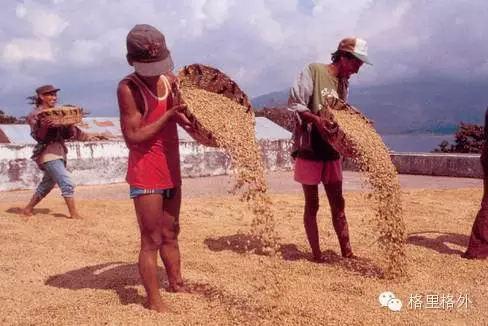
The process of coffee beans from planting and picking to the process of processing coffee beginners
Planting and picking from the coffee tree, the first flowering period is about three years old, and the fruit ripens about 68 months after flowering. The fruit generally contains two seeds, called flat beans, and a few contain only one seed, called round beans. These coffee seeds are raw beans. Coffee fruit contains two seeds, namely coffee beans. The two beans are facing each other on one side of the plane.

Basic knowledge of all aspects of coffee
Linnaeus (Swedish naturalist) classifies coffee plants into the Rubiaceae family, such as gardenia. The great naturalist named it Coffea. Although wild plants can grow as high as 10-12 meters, the plantations are about 3 to 5 meters high, with the exception of Colombia, where tree species rarely exceed 2 meters. This makes farming and picking easier and more economical to cultivate. Leaves